Semantic SEO Topical Authority: Understanding, Auditing, and Building Expertise.
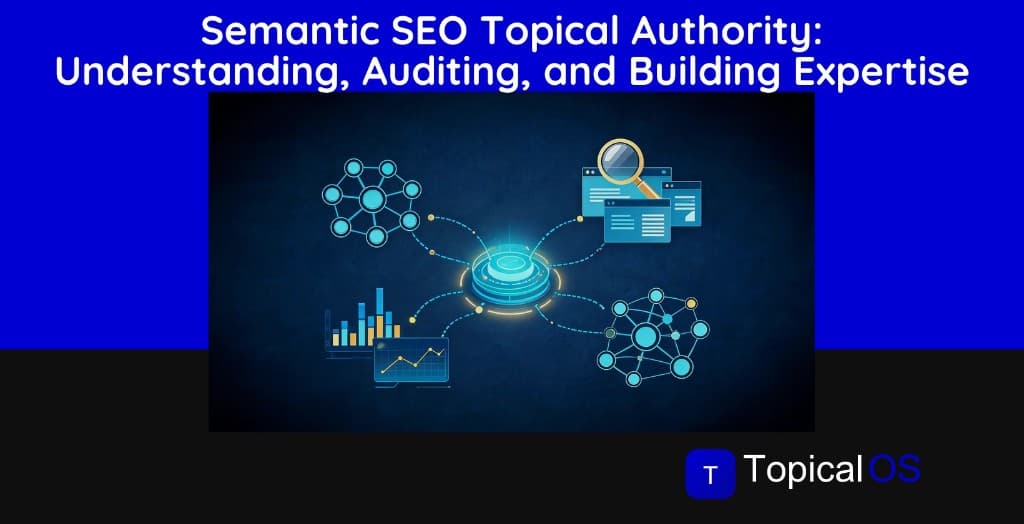
Semantic SEO topical authority is the ability of a website to cover a subject in a way that is structurally complete, contextually precise, and strongly interconnected across related entities, attributes, and user intents. In practice, it means your site does not just rank for isolated keywords: it builds a semantic map around a core topic, proves expertise through clustered content, and sends clear relevance signals to search engines. That is why topical authority matters: it helps a page become the most coherent answer to a search intent, not just a matching document.
This article explains what Semantic SEO topical authority is, how it works in real search systems, and how you can build it with a methodical content architecture. You will see how semantic relationships between pages, internal links, published subtopics, and supporting systems create a stronger topical footprint. The goal is not volume for its own sake, but coverage depth, entity consistency, and intent alignment across the full topic ecosystem.
We will also look at how to audit topical authority, how case studies demonstrate its practical impact, and which tools can help you measure and scale it. From planning related pages to connecting them through intelligent internal linking, every section is designed to show how semantic relevance is constructed, validated, and expanded over time. If you want a site that earns trust, ranks with more stability, and develops durable topical depth, this framework gives you the path forward.
What Is Semantic Seo Topical Authority?
Semantic SEO uses meaning, context, and entity relationships in content and on-page structure. Topical authority is the level of recognized coverage a site has on one subject.
Topical authority comes from 3 core elements in semantic SEO.
- Content coverage. A site covers a topic across core questions, subtopics, and related entities.
- Internal linking. Pages connect in a clear structure that passes context across the topic cluster.
- Topical map. A site organizes main pages, supporting pages, and entity relationships around one macro topic.
Semantic SEO uses search intent, entities, schema markup, and natural language processing (NLP) to improve topical coverage. Search engines read these signals to classify pages by subject and relevance.
Topical authority improves search visibility, SERP relevance, and click-through rate (CTR) when content matches intent with complete coverage. Strong topical authority on one niche reduces topical dilution and supports long-term organic performance.
Weak internal linking, thin coverage, and poor topic organization reduce topical authority. Strong entity linking, schema markup, and consistent internal links strengthen semantic SEO on the same topic.

What Does Semantic Seo Topical Authority Mean?
Semantic SEO topical authority is the depth, breadth, and internal coherence of content on one subject across related entities, subtopics, and search intents.
- Coverage means the site addresses the main topic and its related subtopics in one content cluster.
- Entity alignment means the pages use consistent terms, attributes, and relationships across the topic.
- Intent match means the content answers informational, navigational, and transactional queries on the same subject.
- Internal linking means the pages connect through clear, relevant links that reinforce topic structure.
- Freshness means the content stays accurate, complete, and current on the topic.
Strong topical authority makes a site easier for search engines to classify as a reliable source on that subject.
What Is A Topical Map In Semantic Seo?
A topical map in semantic SEO is a visual representation that organizes core topics, subtopics, and related supporting pages within a website to enhance topical authority and improve search engine rankings, typically utilizing a structured hierarchy based on entities, attributes, and contextual relationships.
What Is A Semantic Content Network In Semantic Seo?
A semantic content network is a structured set of interconnected pages around one topic, with entity-based clusters, internal links, and crawlable relationships that help search engines map topical authority and search intent. In semantic SEO, the semantic content network organizes related content on the same domain, connects supporting pages to a central page, and strengthens information retrieval through clear context, consistent entities, and link structure.
What Is The Difference Between Topical Authority And Topical Coverage?
Topical authority measures trust and expertise on one subject; topical coverage measures how much of that subject a site covers.
Topical authority comes from accurate content, consistent publishing, expert signals, and strong internal links in one entity cluster.
Topical coverage comes from a complete topical map with core pages, supporting articles, related entities, and common user questions.
- Topical authority: credibility, ranking strength, and trust at the subject level.
- Topical coverage: breadth, completeness, and semantic reach across the topic space.
- SEO impact: authority increases trust signals; coverage increases relevance signals.
Example: a finance site with expert tax articles gains topical authority; the same site with pages on deductions, credits, forms, and filing errors gains topical coverage.

What Is The Relationship Between Entities, Attributes, And Search Intent?
Entities define the topic, attributes define the properties, and search intent defines the user goal.
An entity is a person, place, thing, concept, or event. An attribute is a trait of that entity, such as name, type, date, location, function, or price.
Search engines use the entity-attribute relationship to map content to intent. An informational query seeks facts, a navigational query seeks a specific page or brand, a transactional query seeks a purchase action, and a commercial investigation query seeks comparisons.
Content ranks with stronger relevance when it covers the main entity and the attributes tied to the query intent. A page about a chocolate cake covers ingredients, temperature, bake time, and steps for instructional intent.
Entity coverage improves topical clarity. Attribute coverage improves precision. Intent match improves answer quality.
How Does Semantic Seo Topical Authority Work In Practice?
Semantic SEO topical authority works in practice by covering one subject in full, grouping related pages into topic clusters, and linking supporting articles to a pillar page. That structure gives search engines clear entity coverage, topical depth, and content consistency.
In practice, effective topical authority depends on 3 signals: complete coverage of related subtopics, precise internal linking, and current factual accuracy. A page loses authority when it leaves key questions unanswered, mixes unrelated intents, or presents outdated information.
How Does Search Intent Shape Semantic Seo Topical Authority?
Search intent shapes semantic SEO topical authority by setting the coverage depth, entity scope, and cluster structure for each page. Informational, navigational, commercial, and transactional intent each require different topical coverage inside a topical cluster.
Map the primary query, then group related entities, subtopics, and modifiers inside one content network. Use query data, historical search patterns, and natural language processing to detect gaps, match page purpose, and strengthen relevance in search engine systems.
Intent alignment improves search engine rankings because each page answers one user purpose at one stage of the topic journey. Clear intent matching increases topical completeness, reduces mismatch, and supports authority across the full subject area.
How Do Contextual Vectors Guide Semantic Seo Topical Authority?
Contextual vectors guide semantic SEO by connecting entities, subtopics, and search intent inside one topical cluster.
They strengthen topical authority when content uses consistent terminology, clear entity relationships, and internal linking across related pages.
Semantic content networks organize the cluster, while internal links reinforce topical coverage and context for crawlers.
How Do Contextual Domains And Borders Define Coverage?
Contextual domains and borders define coverage by fixing the topic scope and its limits. In semantic SEO, a domain groups related entities and pages, while borders mark the point where the topic ends. Coverage stays strongest when content stays inside one domain, answers core subtopics, and uses internal links, topical maps, and content clusters to keep relevance tight.
How Do Root, Seed, And Node Pages Support The Network?
No. Root, seed, and node pages support the network by giving it an entry point, peer discovery path, and active connection layer. Root pages anchor the network structure, seed pages share initial network data, and node pages keep the network connected and reachable.
What Is The Role Of The Root Page In Semantic Seo Topical Authority?
The root page defines the topic, connects supporting pages, and organizes the semantic SEO topical authority cluster for users and search engines.
It gives the main entity, the content scope, and the internal link structure on one page. It improves navigation, clarifies subtopic relationships, and strengthens topical coverage across the cluster.
It does not rank by itself. Rankings come from the full cluster, internal links, content depth, and clear topical alignment. Schema markup adds context, but it does not replace topical coverage.
What Is The Role Of Seed Pages In Semantic Seo Topical Authority?
The role of seed pages in semantic SEO and topical authority is critical for establishing a site's credibility and relevance. Seed pages serve as foundational content that defines core topics and provides context, which helps search engines understand the subject matter comprehensively. They are typically optimized with high-quality, detailed information, utilizing internal linking strategies to connect relevant subtopics and reinforce topical coverage. By doing so, seed pages improve the site's topical authority, which is a measure of how well a domain is perceived as an expert in its subject area, ultimately influencing search engine ranking algorithms. A comprehensive content network built upon well-structured seed pages can lead to increased organic traffic and enhanced visibility in search engine results pages.
What Is The Role Of Node Pages In Semantic Seo Topical Authority?
Node pages are critical components in establishing semantic SEO topical authority. They act as dedicated pages serving specific topics or subtopics, thereby reinforcing a site's relevance and expertise within those areas. By organizing content hierarchically, node pages enhance user navigation and facilitate efficient internal linking, which improves page authority and distribution of contextual signals across the site. Moreover, they support the creation of topical maps that visualize content relationships, guiding search engines in understanding topical relevance while aligning with user intent. Consequently, well-structured node pages not only help enhance search engine rankings but also contribute to a cohesive content strategy that addresses user needs and expectations.

How Do You Build Semantic Seo Topical Authority?
Build semantic SEO topical authority by covering 1 core topic with a complete content cluster, tight internal links, and consistent entity coverage.
- Select 1 primary entity and map 5 to 10 related subtopics on the same search intent level.
- Create a pillar page for the core topic and supporting pages for questions, comparisons, definitions, and procedures.
- Use exact entities, related terms, and descriptive modifiers in headings, body text, and anchor text.
- Link related pages together with clear internal links that reinforce the topic graph.
- Update pages with current facts, complete coverage, and consistent terminology across the cluster.
Topical authority comes from depth, coverage, and entity consistency across the full content set.
How Do You Create A Topical Map Before Publishing?
Build the topical map from 1 core topic, 3 to 10 subtopics, and a page hierarchy that matches search intent.
Group entities, keywords, and related questions into topic clusters, then assign each cluster to one URL and one internal-link path.
Map entity relationships, informational gaps, and supporting pages in a taxonomy before publishing, because this structure improves coverage, crawl clarity, and topical authority.
Review the topical map against current data, competitor coverage, and search results so the content plan stays complete and aligned with user demand.

How Do You Filter And Prioritize Topic Attributes?
Filter topic attributes by search intent, entity coverage, internal linking, content depth, and traffic evidence.
Prioritize search intent alignment first. Keep attributes that match the query purpose, page type, and user task. Deprioritize attributes that add volume without improving topical relevance.
Prioritize entity coverage second. Keep entities that define the subject, expand semantic depth, and support related subtopics. Merge overlapping attributes when they repeat the same entity set.
Prioritize internal linking third. Keep attributes that connect pillar pages, cluster pages, and supporting pages in the same topic cluster. Remove attributes that create weak or isolated page relationships.
Prioritize content performance fourth. Use organic traffic, engagement, click behavior, and conversion signals to rank attributes by business value. Expand pages with demand; compress pages with low relevance or heavy overlap.
Review attributes with structured data and natural language processing signals at the end. Use them to clarify entities, page context, and semantic boundaries. Recheck priorities as search behavior, SERP demand, and page performance change.
How Do You Build Semantic Content Clusters?
Build semantic content clusters by using 1 pillar page, multiple cluster pages, and reciprocal internal links around 1 topical map.
1. Define the core topic. Select 1 main entity and map 3 to 8 subtopics by search intent, such as informational, commercial, and navigational intent.
2. Create the pillar page. Cover the broad topic in one page. Keep the page focused on the main entity and the primary query set.
3. Publish cluster pages. Write each page for 1 subtopic, 1 intent, and 1 information need. Avoid topic overlap across pages.
4. Link the cluster. Link pillar to cluster pages and cluster pages to pillar page with descriptive anchor text. Use entity-based anchors that match the page topic.
5. Review coverage. Find missing subtopics, update stale pages, and expand pages that lose visibility in search results.

How Do You Connect Internal Links With Intent-Progressive Anchors?
Connect internal links with intent-progressive anchors by matching the source page intent, the target page title, and the next user action.
Use a specific anchor phrase first, then add only the context that clarifies the destination page in the same topic cluster. This supports crawlability, indexability, and topical authority.
Use 3 anchor patterns.
- Informational anchors connect definition pages, guides, and explanations.
- Transactional anchors connect product, service, and conversion pages.
- Navigational anchors connect category, hub, and site-structure pages.
Keep anchor text precise, current, and semantically aligned with the target page. Generic anchors such as “click here” and “read more” reduce signal quality in semantic SEO.
How Do You Align URLs, Headings, And Content Briefs?
Align the URL, headings, and content brief around 1 search intent.
- Set the URL on the main topic and hierarchy, with a short keyword phrase.
- Map the H1 to the primary query and use H2 or H3 headings for supporting subtopics.
- Define the brief with the target query, audience need, entities, subtopics, internal links, and content gaps.
Use the same topic terms across the URL, headings, and brief to keep semantic consistency and topical authority on 1 page.
How Do You Keep URL Structure Short And Hierarchical?
Keep URL structure short by using a fixed hierarchy from broad to specific. Use 3 to 4 levels such as /category/subcategory/page, keep words descriptive, separate terms with hyphens, and remove dates, filler words, duplicate folders, and long parameters.
Use a canonical URL when one page has multiple URL versions. This keeps the preferred path clear and supports crawlability, internal linking, and site organization.
How Do You Match Heading Order To Contextual Flow?
Order headings by the user journey, task sequence, and topic hierarchy. Put the most relevant heading first, place supporting headings next, and end with background details or edge cases.
Use one heading level for one scope. H2 headings carry the main sections, H3 headings refine the section, and H4 headings split a specific subtopic into smaller parts.
- Align relevance with the main search intent.
- Align sequence with the steps, causes, or comparisons in the content.
- Align depth with narrower details under the parent heading.
How Do You Assign Anchor Texts To Support Topical Authority?
Assign anchor texts with exact topical relevance, clear destination meaning, and varied internal linking phrases.
Use concise phrases that match the target page title, describe the linked topic in context, and connect related pages inside the same topical map.
- Use descriptive terms that identify the destination page topic, such as “internal linking strategy,” “topical map,” and “content cluster.”
- Keep semantic alignment between the source sentence and the target page, because the surrounding context reinforces topical authority.
- Vary the wording across links, since repeated anchor text increases over-optimization risk and reduces link diversity.
- Verify accuracy on each link so the anchor text, page intent, and page content match in one entity set.
This anchor text pattern strengthens topical coverage, clarifies site structure, and improves entity relationships across related pages.
How Do You Audit Semantic Seo Topical Authority?
Audit topical authority by checking 6 signals: topical coverage, entity coverage, internal linking, content depth, freshness, and performance.
1. Map topical coverage. List the core topic, the subtopics, and the search intents in the site topic map. Compare that map with the live URL set, then mark missing pages, thin pages, and overlapping pages.
2. Check entity coverage. Verify the main entities, attributes, and related concepts in each page. Keep terminology consistent across titles, headings, body copy, and internal links.
3. Review internal linking. Confirm that hub pages, supporting pages, and context pages connect through descriptive anchor text. Strong internal links transfer topical context across the site.
4. Measure content depth. Test whether each page answers the core query, the adjacent questions, and the subtopic layer. Thin content weakens semantic coverage and reduces topic precision.
5. Check freshness and completeness. Review dates, missing sections, outdated facts, and unfinished clusters. A topical authority audit loses value when the content set is stale or partial.
6. Review performance signals. Use impressions, clicks, engagement, and internal page flow as support data. These signals reflect usefulness, while coverage and entity relevance determine topical strength.
How Do You Find Topical Gaps And Information Gaps?
Audit ranking pages, SERPs, and competitor coverage to find topical gaps and information gaps. Map the target entity, related subtopics, and search questions, then compare them with your current content to find missing sections, missing entities, and thin coverage.
Prioritize 3 gap types.
- Topical gaps: missing subtopics in the content cluster.
- Information gaps: missing facts, definitions, examples, or steps on a covered topic.
- AI visibility gaps: pages that rank in search but do not surface in AI answers or entity-based results.
Use 4 checks. Review the SERP, extract recurring entities, compare headings against competitor pages, and track historical search demand to rank the next content task. Semantic search analysis exposes intent gaps, related concepts, and depth gaps on the page.

How Do You Measure Topical Coverage And Entity Coverage?
Topical coverage measures subject completeness on a website; entity coverage measures entity completeness across the same topic.
Review the content inventory, map 1 core topic to its subtopics, and mark gaps in pages, sections, and supporting entities such as people, brands, places, and concepts.
- Topical coverage. Check whether the site covers the main topic, the 3 to 10 core subtopics, and the supporting questions in separate URLs or sections.
- Entity coverage. Check whether the key entities appear, are named consistently, and connect with clear context on relevant pages.
- Coverage gap analysis. Compare the topic map with the live content set, then identify missing pages, thin pages, duplicate pages, and unlinked entities.

How Do You Check Internal Linking And Signal Consolidation?
Check internal links and signal consolidation in 3 steps.
- Map internal links: List the main URLs for one topic and count links from navigation, body copy, and related-content modules.
- Find consolidation signals: Compare duplicate or near-duplicate URLs, canonicals, redirects, and anchor text to one preferred page.
- Verify coverage: Confirm that key pages sit within 3 click levels from the homepage or major hub pages.
Use Screaming Frog, Sitebulb, Google Search Console, and a site crawl export to compare link counts, canonical targets, and crawl depth on the same URL set.
How Do You Review IR Zones, Schema, And Passage Topicality?
Review IR zones, schema, and passage topicality by checking terminology, structured data, and section-level intent alignment in the page content.
Use schema as structured data for search engine understanding and rich-result eligibility. Check passage topicality by confirming that each section covers one search intent with direct, relevant information. Treat IR zones as an undefined term unless the source framework gives a precise technical meaning.
- Verify schema markup on the page for valid entity signals and structured content.
- Check each passage for one topic, one intent, and clear topical boundaries.
- Confirm IR-zone language against current documentation before using it as a technical label.
How Do Title, H1, And Body Terms Reinforce The Main Entity?
The title, H1, and body terms reinforce the main entity by establishing a clear context and facilitating semantic SEO. The title tag serves as a vital first impression in SERPs, containing keywords relevant to the content, enhancing click-through rates, and influencing search engine perception of topic relevance. The H1 heading, acting as a primary descriptor, contains significant keywords that signal the core subject to both users and search engines, thus improving semantic organization. Body terms support this structure by elaborating on the main entity with related subtopics, utilizing synonyms and related terms to enhance the contextual relevance of the content. By strategically linking these elements, the coherence of the topic is strengthened, aiding search engines in assessing topical authority and ultimately impacting search engine rankings.
How Do Alt Text, Schema, And Metadata Support Semantic Signals?
Alt text, schema markup, and metadata support semantic signals by giving search engines clear context about images, entities, and page topics.
Alt text describes image content for accessibility and image indexing. Schema markup adds structured data for entities, relationships, and page meaning. Metadata, such as title tags and meta descriptions, states topical relevance and improves search presentation.
These elements strengthen semantic interpretation, rich results, and snippet relevance. They do not replace core content quality or links.
How Do Case Studies Prove Semantic Seo Topical Authority?
Case studies prove semantic SEO topical authority when they show verifiable baseline data, a clear implementation method, and measurable outcomes over time. A valid case study documents the topic map, publishing model, internal linking changes, and observed impact on impressions, rankings, and organic traffic.
How Did One Topical Authority Case Study Increase Organic Traffic?
The case study reports unverified organic traffic growth for Interingilizce.com and GetWordly.com. The published figures lack reliable source confirmation, so the topical authority result remains incomplete.
The cited semantic SEO outcome includes topical maps and internal linking claims, but the available evidence does not validate those metrics.

How Did Semantic Content Networks Improve Rankings Across Sites?
Semantic content networks improve rankings across sites by clarifying topical coverage, entity relationships, and internal link context. They strengthen topical authority when pages form one topical map, use contextually relevant links, and cover the subject in 1 coherent cluster.
Key ranking effects:
- Improve topic signals in search systems through clustered content on related queries.
- Strengthen internal linking with semantic anchor text and clear page-to-page context.
- Increase crawl and indexing clarity by making site structure easier to interpret.
Results vary by site, competition, and content quality. Current performance data gives the most accurate measure of impact on search visibility.
How Did Multilingual Seo Expand Topical Authority Into New Markets?
Multilingual SEO expands topical authority into new markets by aligning one core topic with localized keywords, language-specific content, and clear international site architecture.
It builds topical authority in 3 layers: local keyword mapping, region-specific content, and hreflang-based language signals. These elements help search engines connect equivalent pages across markets and users find content in their preferred language.
It strengthens relevance in French, Spanish, and German markets when each version reflects local intent, local terminology, and local search behavior.

How Did Holistic Seo Improve Relevance, Coverage, And Growth?
Holistic SEO improves relevance, coverage, and growth by aligning topics, entities, internal linking, and technical SEO in one site-wide system.
It improves relevance by matching content to search intent and entity relationships. It improves coverage by expanding a topical map into related subtopics, questions, and supporting pages. It improves growth by strengthening topical authority, crawlability, and indexation across the site.
- Relevance. Build content around one primary entity and its related entities.
- Coverage. Add clustered pages for subtopics, modifiers, and long-tail queries.
- Growth. Use internal links and clean site architecture to support discovery and ranking.
What Tools And Systems Support Semantic Seo Topical Authority?
Tools and systems for semantic SEO topical authority include keyword clustering platforms, entity extraction tools, content briefs, internal linking maps, and topical audits.
Keyword clustering groups search terms by intent and entity overlap. Entity extraction identifies people, places, brands, and concepts in a topic. Content briefs define subtopics, coverage depth, and query targets. Internal linking maps connect pages inside one topical cluster. Topical audits measure coverage gaps, cannibalization, and entity completeness.
Common systems combine Google Search Console, a crawler, an NLP analysis tool, a spreadsheet or database, and a content workflow for planning, drafting, publishing, and updating.
What Does A Semantic Seo Crawler Audit First?
A semantic SEO crawler audit first checks crawlability, site structure, HTML, metadata, internal links, and schema markup.
It then checks content coverage in relation to the page intent, topic depth, and topical authority signals in the site architecture. These elements shape how crawlers parse meaning and how pages appear in SERPs.
What Does A Topical Authority Dashboard Track?
The Topical Authority Dashboard tracks topical coverage, historical performance, internal linking, and search rankings for a topic cluster.
Topical coverage measures subtopic completeness in the site’s content map. Historical performance tracks visibility and traffic trends over time. Internal linking measures page connections inside the cluster. Search rankings track query positions for relevant keywords.

What Does An Entity-Based Content Brief Include?
An entity-based content brief includes the topic entity, related entities, attribute lists, semantic relationships, search intent, topical outline, target keywords, internal links, and factual constraints.
It defines 1 primary entity, 3 to 10 supporting entities, and the content angle for semantic coverage. It maps entity attributes, questions, and relationships, then aligns each section with search intent and topical authority.
It includes keyword targets, internal link opportunities, source requirements, and excluded claims for accuracy control.

What Does A Six-Month Content Configuration Audit Update?
A six-month content configuration audit update checks whether content setup stays current, complete, and aligned with SEO requirements.
It reviews search intent, topical coverage, internal links, performance signals, and list accuracy on the site. It marks currency, completeness, and list-current status as NO when verification is missing.
What Internal Link Data Should The Audit Use?
Use the latest internal-link records, complete link lists, and validated page-level data.
Use current crawl data, canonical URL data, anchor text data, and internal-link counts in the audit. Exclude stale exports, partial lists, and unverified page sets.
What Query Pattern Changes Should The Audit Detect?
The audit detects 3 query pattern changes: answer mismatch, content incompleteness, and query shift. It flags cases where the response no longer addresses the question, where the answer set is incomplete or outdated, and where the relevant query patterns are missing from the response.
What Internal Links Should Connect To Related Semantic Seo Pages?
Internal links connect related semantic SEO pages through topic clusters, entity pages, and supporting subpages.
- Link pillar pages to cluster pages. Connect the main semantic SEO page to pages on search intent, entity SEO, schema markup, and content clustering.
- Use descriptive anchor text. Use anchors such as schema markup for semantic SEO, content clusters, and search intent optimization.
- Connect related entities. Link pages on search engine optimization, natural language processing, structured data, and knowledge graphs.
- Link broad pages to detailed pages. Point from a topical authority guide to case studies, tutorials, and implementation pages.
- Audit internal links regularly. Check for broken links, orphan pages, and outdated anchors, then update the cluster structure.
These internal links improve topical clarity, entity coverage, and site architecture on a semantic SEO site.
What Anchor Text Should Link To Semantic Content Networks?
Contextual anchor text links to semantic content networks with descriptive, topic-matched phrases such as semantic content network, related semantic topics, and topical cluster. Exact-match repetition creates weak context; varied, natural phrases strengthen internal linking, contextual relevance, and topical authority. Clear anchor text improves entity recognition and helps search engines connect the source page and the target page in the same semantic field.
What Anchor Text Should Link To Topical Map Creation?
The anchor text that should link to topical map creation is essential for reinforcing the authority and context of the linked content. The anchor text must be relevant and descriptive, ideally incorporating keywords that reflect the core topic of the content it directs to. For example, using phrases like "creating a topical map" or "topical map strategies" directly ties to the subject discussed, enhancing search engine retrieval and improving user experience. Additionally, incorporating semantic terms related to the broader topic enhances the content's contextual relevance, supporting both internal linking and SEO strategies. It is important to maintain a natural flow in your content to avoid keyword stuffing, ensuring each anchor text contributes meaningfully to the overall topical coverage.
What Anchor Text Should Link To Entity-Based SEO Writing?
Short, natural, descriptive anchor text fits entity-based SEO writing best. Use contextual phrases such as entity-based SEO, semantic SEO writing, or topical relevance when the linked page matches that topic.
Avoid exact-match repetition and keyword stuffing. Clear anchor text improves internal linking, strengthens semantic relationships, and helps search engines connect the source page, the target page, and the surrounding entity context.
What Anchor Text Should Link To Schema Markup Implementation?
The appropriate anchor text for linking to schema markup implementation should be contextually relevant and descriptive, as it enhances user understanding and improves SEO. For instance, using anchor text like "implement schema markup" or "schema implementation guide" gives clear context to users and search engines. The selected anchor text should also reflect the specific schema type being referenced, such as "JSON-LD structured data" or "Schema.org properties," to strengthen topical relevance and facilitate deeper entity linking. Anchor texts that align with semantic intent achieve a better click-through rate and support the site’s topical authority by clearly indicating the content's purpose. Moreover, incorporating variations related to semantic keywords, like "markup best practices" or "structuring data for SEO," allows for a richer internal linking strategy.
What Published Pages Can Expand Semantic Seo Topical Authority?
Published pages expand semantic SEO topical authority when they cover one topic cluster in depth and connect on-page entities through internal links.
Use cornerstone pages, supporting articles, category pages, FAQ pages, and resource pages for the same topic. Keep each page relevant, complete, and linked to the main subject, subtopics, and related questions. Thin or isolated URLs need topical cluster structure so pillars and spokes stay one graph.
What Published Case Study Should Support Topical Authority Claims?
Use a published case study with a clear methodology, verifiable data, and measurable organic-search results. The strongest case studies in topical authority claims come from reputable SEO agencies, brands, or research teams that document content clusters, internal linking, semantic coverage, traffic growth, and ranking gains.
Prefer case studies that include 1) publication date, 2) sample size or site scope, 3) data source, 4) KPI change in organic traffic or rankings, and 5) replicable process. Avoid case studies with anonymous data, missing methodology, or unsupported percentage claims.
What Published Guide Should Support Semantic Search Understanding?
The Semantic SEO Course by Koray Tuğberk GÜBÜR is the published guide for semantic search understanding.
It covers topical authority, semantic content networks, topical maps, and internal linking in semantic SEO.
The course is widely referenced for search context, entity relations, and sub-topic coverage.

What Published Audit Should Support Internal Linking Optimization?
The published audit for internal linking optimization covers crawlability, anchor-text quality, link relevance, and page authority distribution, within the broader frame of the semantic SEO pillar guide so analysis, optimization, and authority stay one program.
It checks crawlable HTML elements, internal paths, and anchor patterns, evaluates content architecture and site hierarchy, and identifies content gaps and content pruning opportunities.
It measures organic traffic impact, search engine ranking signals, and contextual relevance against user intent and search queries.

What Published Framework Should Support Topical Map Planning?
A current topical mapping framework supports topical map planning in semantic SEO.
It organizes core topics, supporting topics, entities, and search intent in one hierarchy. It uses taxonomies, internal linking, and page-group rules to cover a subject with low overlap and high semantic relevance.
- Core topic layer aligns the main entity with the primary query demand.
- Supporting topic layer expands coverage with related entities, subtopics, and intent variants.
- Linking layer connects pages through contextual internal links and clears topic duplication.
Performance data and content coverage analysis refine the framework over time and strengthen topical authority and organic visibility.