Semantic SEO: Building Topical Authority with Clusters.
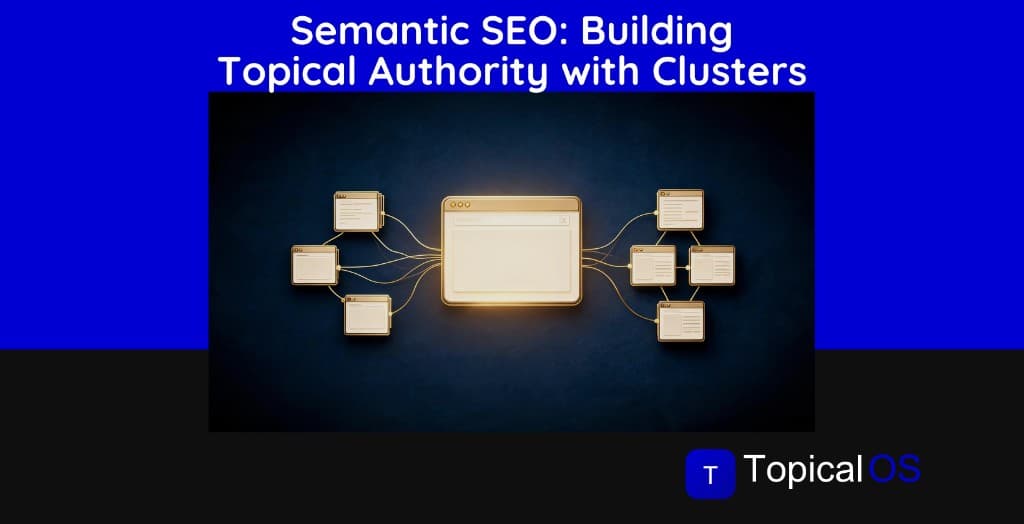
Semantic SEO topical clusters are a structured way to organize content so a search engine can clearly understand an entity, its attributes, and the full set of related intents around it. In practical terms, they help your site cover a topic with enough depth, coherence, and contextual breadth to rank for a wider semantic field rather than for a single isolated keyword. This is especially important in 2026, where SEO is not dead at all: it is evolving toward entity understanding, topical authority, and intent satisfaction.
A semantic topic cluster is a content architecture built around one central pillar page and multiple supporting pages that expand the subject from different angles. The goal is to answer the main question directly, then reinforce it with connected subtopics, keyword variants, and related concepts that prove topical completeness. This structure improves relevance because it aligns content with how search engines interpret meaning, relationships, and user intent, not just exact-match phrases.
In this article, you will see why AI will not replace SEO, but will instead change how SEO work is executed, researched, and scaled. You will also learn what topical clustering is, why it improves rankings, how to build clusters strategically, and how to choose the right topics and keywords for a pillar page. The framework also covers the 4 types of keywords, the 4 types of clustering, and the 80/20 principle so you can prioritize the pages and entities that create the strongest semantic impact.
If you want to build a content system that is easier to crawl, easier to understand, and more competitive in search, semantic SEO topical clusters are one of the most effective models. They connect definition, coverage, internal linking, and informational depth into a single architecture that supports visibility, authority, and long-term rankings.
Is SEO dead or evolving in 2026?
SEO is not dead in 2026; it is an evolving search visibility practice.
Search now ranks content by user intent, entity coverage, topical authority, and content structure across Google Search, generative search, and AI-assisted discovery.
- Intent alignment: Match the query purpose in the page title, headings, and body. Search systems evaluate whether the page answers the task, the question, or the comparison behind the query.
- Entity coverage: Include the main entity, related entities, and attributes in the same topic field. This improves semantic relevance for people and search crawlers.
- Topical clusters: Build a pillar page with supporting cluster pages. This architecture concentrates topical authority on one subject.
- Internal linking: Connect related pages with descriptive anchor text. This improves crawl paths, page discovery, and relevance signals across the site.
- Generative search visibility: Use clear sections, concise answers, and source-backed statements. AI search systems extract and summarize structured content more easily than fragmented text.
SEO in 2026 rewards pages that cover one topic deeply, use semantic terms precisely, and present information in a machine-readable structure.
SEO is evolving from keyword matching into search understanding.
Will AI replace SEO?
No. AI does not replace SEO in 2026. AI changes SEO into semantic search optimization, entity optimization, and intent matching.
Search engines and AI answer systems still use 3 core signals:
- Clear structure: Headings, paragraphs, and internal links improve machine parsing.
- Topical authority: Related pages around 1 subject improve trust on a site.
- Source quality: Accurate, current, and original content improves retrieval and ranking.
SEO in the AI era works through 4 practical layers:
- User intent: Pages answer one search task on one topic.
- Semantic SEO: Pages use entities, synonyms, and related terms in context.
- Schema markup: Structured data clarifies products, organizations, people, and topics.
- Topical clusters: A pillar page connects to supporting cluster pages on the same subject.
AI increases the value of SEO because AI systems still depend on content that is crawlable, structured, and trustworthy. Sites with strong internal linking, precise entity coverage, and updated information stay easier to understand in search and in AI-driven results.
What is topical clustering in SEO?
Topical clustering in SEO organizes related pages around 1 central topic. It builds topical authority through a pillar page and cluster pages.
The pillar page covers the broad subject. The cluster pages cover subtopics in detail and link to the pillar page. This structure improves internal linking, crawlability, and site architecture.
Topical clustering strengthens semantic coverage and topical relevance. It groups content by search intent, not by isolated keywords.
Topical clustering fits 3 common site patterns: small clusters with a few pages, medium clusters with multiple subtopics, and large topic families with layered content. Each pattern uses the same subject-based logic.
Topical clustering suits SEO teams that plan content at scale. It clarifies content relationships, supports subject depth, and gives search engines clearer entity signals.
Topical clustering differs from keyword-based SEO because it prioritizes topic relationships, page roles, and content depth over single-term targeting.
What are semantic clusters?
Semantic clusters group related pages around 1 central topic, pillar page, and set of cluster pages.
1. Pillar page. It covers the main topic at a broad level and connects to related pages on the site.
2. Cluster pages. They cover subtopics, search intent, and related entities in more detail.
3. Internal links. They connect the pillar page and cluster pages, which improves topical structure and crawl paths on a website.
4. SEO use. Semantic clusters support semantic SEO, content planning, and information architecture. They do not act as a direct ranking signal.
5. Content quality. The SEO value comes from relevant coverage, strong internal linking, and matching user intent on each page.
What Are Semantic SEO Topical Clusters?
Semantic SEO topical clusters group related pages around 1 central topic. They connect a pillar page with cluster pages to create clear topical coverage, internal links, and contextual relevance on a site, consistent with the semantic SEO foundations workflow and building topical authority when depth—not only hub pattern—must hold.
1. Pillar page. The pillar page covers the main topic at a broad level. It targets the core entity and links to supporting pages on specific subtopics.
2. Cluster pages. Cluster pages cover one subtopic each in depth. They expand the pillar page with related terms, entities, and questions in the same topic area.
3. Internal linking. Internal links connect the pillar page and cluster pages. Relevant anchor text clarifies page relationships and helps search engines crawl the cluster structure.
4. Topical authority. A complete topical cluster strengthens topical authority by covering a subject across multiple pages instead of relying on 1 page.
5. Schema markup. Schema markup adds structured data on a page. It gives search engines more context about entities, page type, and content relationships.
6. Orphaned pages. Orphaned pages sit outside the cluster structure. They reduce content connectivity and weaken topical coverage when they lack internal links.
How Do Semantic SEO Topical Clusters Work?
Semantic SEO topical clusters work by grouping 1 pillar page with related supporting pages under 1 search intent topic.
- Choose a pillar topic that covers the core subject in broad terms.
- Create supporting pages that target one subtopic, one question, or one intent per page.
- Link the pillar page to each supporting page with clear internal links.
- Link each supporting page back to the pillar page when the context fits.
- Align every page with one semantic angle, so the cluster covers the topic in depth without duplication.
This structure helps search engines connect entities, subtopics, and query intent across the cluster.
What Is A Topic Cluster In Semantic SEO?
A topic cluster in semantic SEO is a strategic content architecture approach that organizes related web pages around a central pillar page, creating a structured environment to enhance topical authority and improve search visibility. This method not only supports effective internal linking but also allows search engines to better understand the relevance and relationships among content, fostering increased traffic and engagement across a website.
What Is A Pillar Page In Semantic SEO?
A pillar page in semantic SEO is a comprehensive web page that covers a broad topic and serves as a central hub for related content, known as cluster pages, facilitating better organization of information and improving topical authority, which leads to enhanced visibility in search results.
What Is A Spoke Page In Semantic SEO?
A spoke page in semantic SEO refers to a specific webpage within a topic cluster that focuses on a subtopic related to a central theme, ultimately linking back to the hub or pillar page. These pages serve to enhance topical authority, provide detailed information on specific aspects of the main topic, and are indexed by search engines to improve visibility and relevance.
Why Do Semantic SEO Topical Clusters Improve Rankings?
Semantic SEO topical clusters improve rankings by strengthening topical authority, clarifying site structure, and expanding keyword coverage.
1. Organize theme relevance. A pillar page and cluster pages group related entities under 1 macro topic. Search engines process that structure with clearer context on page relationships and subtopics.
2. Build topical authority. A complete cluster covers a subject in depth. This coverage increases entity relevance across the topic and supports stronger ranking signals on related queries.
3. Expand query coverage. Cluster pages target different intents, modifiers, and semantic variants. That pattern increases visibility for more search terms without keyword repetition.
4. Strengthen internal linking. Links between the pillar page and cluster pages distribute relevance across the topic set. Internal links guide crawlers and users through related content paths.
5. Improve user experience. A cluster shortens navigation time, groups answers by intent, and supports related-page discovery. That structure improves content clarity on the site.
How Do Semantic SEO Topical Clusters Build Topical Authority?
Semantic SEO topical clusters build topical authority by grouping a pillar page and supporting pages around 1 core entity, 1 search intent set, and related subtopics.
Use 5 cluster actions.
- Select a core topic: Choose 1 subject with clear audience demand, entity coverage, and intent coverage.
- Build a pillar page: Create 1 central page that covers the main topic in broad scope and links to subtopic pages.
- Publish supporting pages: Cover related questions, comparisons, definitions, and procedures in separate cluster pages.
- Connect internal links: Link the pillar page and cluster pages with relevant anchor text and close topical context.
- Expand the cluster: Add new pages when query demand, entities, or subtopics change.
Semantic SEO topical clusters increase topical authority through depth, coverage, and internal link structure.
How Do Semantic SEO Topical Clusters Signal Entity Coverage?
Semantic SEO topical clusters signal entity coverage by organizing one pillar topic and its related subtopics on one site, with internal links that connect pages about the same entity set, intent, and context.
They strengthen topical authority when the cluster covers 3 core layers: the main entity, related attributes, and supporting questions. They signal breadth in search engines through repeated, coherent references across the cluster.
Entity coverage is stronger when the cluster includes the primary term, close variants, and linked subtopics in the same semantic field. Schema markup supports entity identification, but it does not replace content coverage. Search intent alignment and internal link structure remain the main signals.
How Do Semantic SEO Topical Clusters Improve Internal Linking?
The improvement of internal linking through semantic SEO topical clusters lies in the structured organization of related content. These clusters consist of a central pillar page linked to multiple cluster pages, enhancing the overall topical authority of a website. When internal links are strategically placed, they not only support navigation but also distribute link equity, helping search engines evaluate the relevance of each page more effectively. This interconnectedness allows crawlers to discover and index all relevant content more efficiently, which can ultimately lead to improved search engine rankings. Moreover, using descriptive anchor text within these links further clarifies context for search engines, reinforcing the semantic relationships between content.
How Do Semantic SEO Topical Clusters Support Generative Search Visibility?
Semantic SEO topical clusters organize a site around 1 pillar page and supporting cluster pages, and that structure improves generative search visibility by clarifying topical authority, entity coverage, and semantic relationships.
Use 4 cluster functions:
- Pillar coverage maps the main topic at the highest level.
- Cluster coverage answers specific intents, questions, and entities.
- Internal links connect the pillar page and cluster pages for crawl discovery and context.
- Schema markup reinforces entity signals in structured data.
Semantic SEO increases relevance in organic search, featured snippets, and generative results when the cluster matches search intent, uses consistent terminology, and stays current during content updates.
How Do You Build Semantic SEO Topical Clusters?
Build semantic SEO topical clusters by mapping 1 pillar topic, 3 to 7 supporting subtopics, and a tight internal-link network around one search intent.
- Define the core entity: Pick 1 main topic, such as semantic SEO topical clusters, and map the exact user intent around it.
- Create the pillar page: Cover the main topic in one central page and keep the scope broad, clear, and complete.
- Draft supporting cluster pages: Build separate pages for each subtopic, such as internal linking, topical authority, and structured data.
- Connect the pages: Link each cluster page to the pillar page and to closely related cluster pages where the context matches.
- Audit the cluster: Review coverage, freshness, and factual accuracy at regular intervals so the cluster keeps its semantic depth and topical relevance.
Use structured data when the page entity and page purpose match a schema type. Semantic SEO topical clusters gain clearer machine interpretation when the content structure, internal links, and entity relationships stay consistent.
What Is The 7-Step Semantic SEO Topical Cluster Process?
7-step Semantic SEO topical clustering uses 7 actions: map the topic, group search intent, build a pillar page, publish cluster pages, add internal links, apply schema markup, and measure organic performance.
- Map the core subject and the user questions in the search results.
- Group keywords and entities into 1 topical cluster around 1 pillar topic.
- Create 1 pillar page for the main entity and intent.
- Publish cluster pages for each subtopic and query variant.
- Connect pillar and cluster pages with internal links in both directions.
- Add schema markup where the page type matches the content entity.
- Track organic traffic, CTR, and engagement, then refine the cluster from the data.
How Do You Choose The Central Entity For Semantic SEO Topical Clusters?
Choose the central entity by matching one main subject to the highest search intent, the broadest content scope, and the strongest keyword demand in the topical cluster.
Review 3 signals in the niche: audience relevance, search volume, and entity breadth. Select the entity that fits a pillar page and supports multiple subtopics on the same semantic graph.
Validate the choice with keyword research, entity research, content gap review, and internal linking maps. Build the pillar page around that entity, then connect cluster pages for adjacent questions, variants, and supporting concepts.
How Do You Group Queries Into Semantic SEO Topical Clusters?
- Group by search intent. Separate informational, navigational, commercial, and transactional queries into distinct semantic SEO topical clusters.
- Group by entity and meaning. Cluster queries around the same entity, attribute, and relationship, not only around the same keyword.
- Group by topic depth. Place broad head terms in the pillar page and place long-tail subtopics in supporting cluster pages.
- Group by SERP overlap. Combine queries with similar search results, because shared SERPs signal close topical relevance.
- Group by content gap. Use query grouping to find missing subtopics and build pages that complete topical coverage.
How Do You Map Entities And Attributes Across Semantic SEO Topical Clusters?
Map entities and attributes across semantic SEO topical clusters by using one core entity, related sub-entities, and clear attribute sets in one topical graph.
- Identify the core entity. Set one primary entity for the pillar page, such as a product, service, concept, person, or organization.
- List related entities. Add 5 to 15 connected entities from the same topical field, such as tools, standards, problems, solutions, locations, or industry terms.
- Assign attributes. Define 3 to 7 attributes for each entity, such as features, functions, characteristics, benefits, use cases, and relationships.
- Group by intent. Separate entities by informational, navigational, commercial, and transactional search intent.
- Build the cluster structure. Place the core entity on the pillar page and place sub-entities on supporting pages or sections.
- Connect with internal links. Link the pillar page to the cluster pages, then link related cluster pages where the semantic relationship is direct.
- Apply schema markup. Mark up entities, attributes, and page types with structured data where the page type supports it.
- Cover query variants. Use synonymous phrasing, question forms, and long-tail modifiers that match user search patterns.
- Check coverage gaps. Audit the cluster for missing entities, missing attributes, and weak internal connections.
How Do You Assign Pillar And Spoke Pages In Semantic SEO Topical Clusters?
- Assign the pillar page to the broadest search intent. The pillar page covers the full topic, the main entity set, and the core query at a high level.
- Assign each spoke page to one narrow subtopic. A spoke page covers one intent, one entity group, or one task, such as a process, comparison, or example.
- Use topical scope as the main test. A page with broad coverage belongs in the pillar. A page with focused coverage belongs in a spoke.
- Link every spoke page to the pillar page. The pillar page links to the main spokes, and each spoke page links back to the pillar page with matched anchor text.
- Keep entity boundaries clear. Avoid duplicate coverage across pillar and spokes. Each page keeps one role in the topical cluster.
- Review the cluster after publishing. Expand the pillar page if the subject stays broad. Split a spoke page into a subcluster if the scope grows too wide.
How Do You Plan Internal Links In Semantic SEO Topical Clusters?
Plan internal links in semantic SEO topical clusters by mapping 1 pillar page, 5 to 10 cluster pages, and 1 clear link path between related entities.
- Build the cluster map. Assign one pillar page to the main topic and assign each cluster page to one subtopic.
- Link by semantic relation. Connect pages that share entity, intent, or question overlap in the same topic scope.
- Use descriptive anchor text. Match the anchor text to the destination page topic and context.
- Link both directions. Add links from the pillar page to cluster pages and from cluster pages back to the pillar page.
- Review orphan pages. Check that every important page receives at least 1 relevant internal link in the cluster.
How Do You Add Schema To Semantic SEO Topical Clusters?
Implement schema in JSON-LD on each pillar page and cluster page. Use Schema.org types that match the page role, then align Article, WebPage, and BreadcrumbList markup with the topical cluster, internal links, and visible content.
Use entity-specific schema where the page content supports it. Mark the pillar page as the primary topic page. Mark supporting pages with the narrow subtopic they cover. Keep the structured data consistent with headings, URLs, and anchor text in the cluster.
Test the markup in current structured data tools, then review Google Search Console for coverage, enhancements, and rich result reports. Schema clarity increases search-engine understanding of topic relationships, page purpose, and entity context across the cluster.
How Do You Audit Coverage In Semantic SEO Topical Clusters?
Audit coverage in semantic SEO topical clusters by mapping 3 layers: pillar page, supporting subtopics, and entity coverage.
- Check query coverage in Google Search Console by matching impressions and clicks to each cluster page.
- Map intent gaps by comparing target queries with published pages in the topical cluster.
- Review internal links between the pillar page and cluster pages, and between related cluster pages.
- Verify entity coverage for key terms, attributes, and related concepts across the cluster.
- Add schema markup where page meaning and entity relationships need clearer machine interpretation in SERPs.
A complete audit shows missing subtopics, weak links, and uncovered entities.
What Makes A Good Semantic SEO Topic Cluster?
A good semantic SEO topic cluster has 6 parts: one core topic, one pillar page, tightly related cluster pages, aligned search intent, clear internal linking, and relevant structured data.
Use this structure for semantic SEO and topical authority.
- Core topic. Choose one broad entity that fits the site theme and supports multiple subtopics.
- Pillar page. Build one hub page that covers the core topic at a high level and connects the cluster.
- Cluster pages. Create focused pages that answer specific queries, subtopics, and related entities.
- Search intent. Match each page to one intent type, such as informational, commercial, or navigational, and cover the expected entities.
- Internal links. Link the pillar page to each cluster page and link each cluster page back to the pillar page.
- Structured data. Add schema markup when it matches the page type, entity, and content.
Topical authority grows when the cluster stays on one theme, uses distinct page roles, and avoids duplicate coverage.
Search visibility improves when the pages form a clear information graph, the terminology stays consistent, and the links reflect hierarchy.
What Are The 5 Core Components Of Semantic SEO Topical Clusters?
- Semantic entity coverage: Semantic SEO topical clusters cover the main entities, attributes, and related concepts around one topic. This coverage includes people, products, places, events, and terms that search engines associate with the subject.
- Topical mapping: Topical mapping organizes related subtopics around one central entity. It connects search intent, query variations, and page roles across the cluster.
- Pillar content: A pillar page gives the topic-level overview and connects the cluster. It centralizes the main entity and routes users into supporting pages.
- Internal linking: Internal linking connects pillar pages and supporting pages across the cluster. It distributes relevance signals, strengthens semantic relationships, and improves crawl paths.
- Structured data and context: Structured data, consistent terminology, and surrounding context help engines interpret the cluster. Schema markup adds entity signals that support semantic understanding.
What Is The Hub Page Role In Semantic SEO Topical Clusters?
A hub page serves as the central page in a semantic SEO topical cluster. It covers the main topic, links to cluster pages, and receives internal links back from those pages. This structure strengthens topical relevance and internal navigation. Google does not treat hub page as an official ranking term.
What Is The Spoke Page Role In Semantic SEO Topical Clusters?
Spoke pages serve as essential components within a semantic SEO structure, linking back to a central pillar page and enhancing the overall topical authority of a site by providing depth on related subtopics, which helps search engines recognize the semantic connections between content, thereby improving crawlability and visibility in search results.
What Is The Internal Link Role In Semantic SEO Topical Clusters?
Internal links organize a topical cluster by connecting the pillar page, cluster pages, and related subtopics on the same site.
They signal topic hierarchy, support entity relationships, distribute internal authority, and improve crawlability and indexation.
Descriptive anchor text, links from cluster pages to the pillar page, and links between related cluster pages strengthen topical relevance and search intent alignment.
Schema markup supports entity interpretation in semantic SEO, but it does not replace internal linking.
What Is The Schema Role In Semantic SEO Topical Clusters?
Schema markup clarifies entities, content type, and page relationships in topical clusters. In semantic SEO, schema markup strengthens entity recognition on pillar pages and supporting pages, and it improves topical relevance in search indexing. It does not replace internal linking, content depth, or full topic coverage.
What Is The Entity Coverage Role In Semantic SEO Topical Clusters?
Entity coverage drives semantic SEO topical clusters by defining the main entity, its related entities, and the content relationships across cluster pages.
It improves search engine understanding of topic breadth, entity relationships, and user intent coverage on the page.
- Main entity: the central subject that anchors the cluster.
- Supporting entities: related people, places, tools, or concepts that expand the topic.
- Attribute terms: properties, variants, and qualifiers that add semantic context.
- Internal links: page-to-page connections that reinforce the cluster structure.
Strong entity coverage increases topical relevance, semantic precision, and cluster completeness.
How Do You Choose Topics For Semantic SEO Topical Clusters?
Choose topics for semantic SEO topical clusters by mapping 5 inputs: content gaps, user queries, competitor coverage, keyword clusters, and content hierarchy.
- Analyze content gaps: Review existing pages, identify missing entities, weak subtopics, and undercovered questions.
- Leverage user queries: Use search terms, People Also Ask questions, and on-site queries to capture real intent in the niche.
- Incorporate competitor coverage: Compare pillar pages, cluster pages, and recurring topics across competing domains.
- Utilize keyword clustering: Group semantically related keywords by shared intent, entity, and search context.
- Define content hierarchy: Assign pillar content, supporting pages, and internal links in one topical structure.
Topical cluster topics come from intent, entity relationships, and coverage depth, not from isolated keywords. Review the cluster map regularly, add missing subtopics, and strengthen internal linking across related pages.
What Queries Belong In Semantic SEO Topical Clusters?
Core head terms, related subtopics, supporting questions, synonyms, long-tail phrases, and entity queries belong in semantic SEO topical clusters.
- Core head terms: main topic terms, category terms, and primary entities.
- Related subtopics: adjacent concepts, subcategories, and supporting themes.
- Supporting questions: what, how, why, and best queries tied to the topic.
- Synonyms and variations: alternate names, phrasing variants, and long-tail keyword forms.
- Entity-based queries: people, products, tools, places, and concepts in the same subject area.
A topical cluster covers one subject in full. The included queries stay semantically related, intent-aligned, and interconnected.
How Do Search Volume And Intent Shape Semantic SEO Topical Clusters?
Search volume sets topic priority, and search intent sets cluster relevance in semantic SEO topical clusters.
1. Search volume identifies queries with enough demand to support a cluster page, supporting internal linking across related subtopics.
2. Search intent groups queries by informational, commercial, and transactional demand, so each cluster page matches the same user goal.
3. Keyword research combines volume and intent, then maps supporting pages, entity terms, and topical coverage around one core topic.
4. Topical authority increases when the cluster covers high-volume queries and intent-aligned variants in one consistent semantic structure.
How Do Competitor Gaps Reveal Semantic SEO Topical Cluster Opportunities?
Competitor gaps reveal semantic SEO topical cluster opportunities by analyzing areas where competing websites fail to cover related subtopics within a main theme. By examining search intent through queries that competitors rank for, content creators can identify keyword breadth and explore content gaps that competitors overlook. Tools like content gap analysis and SEO copywriting allow for the mapping of topical clusters that enhance topical authority and align with user queries that lack comprehensive coverage. Through this analysis, businesses can create tightly focused internal linking strategies, utilizing anchor text that communicates semantic relevance to both crawlers and users. Ultimately, leveraging competitor content gaps facilitates the design of robust pillar pages and cluster pages that foster improved search engine visibility and drive organic traffic.
How Do Existing Pages Reveal Semantic SEO Topical Cluster Gaps?
The existing pages reveal semantic SEO topical cluster gaps when analyzed through content depth, entity coverage, and internal linking effectiveness. Current analyses allow identification of missing subtopics relevant to users’ search intents, essential for building comprehensive topical authority. Audit tools can assess existing content against competitive benchmarks, highlighting areas where less covered topics present opportunities. Furthermore, evaluating keyword breadth across your site's pages aids in pinpointing underrepresented subjects or content clusters that may impact organic search visibility. As you map these gaps, consider implementing schema markup to enhance search engine understanding of your content structure.
How Do Entity Relationships Define Semantic SEO Topical Cluster Boundaries?
Entity relationships define semantic SEO topical cluster boundaries by mapping which pages belong to the same theme and which pages belong to a different theme.
Pillar pages, cluster pages, and related entities form the core cluster in semantic SEO. Internal links, shared search intent, and entity overlap connect pages inside the same boundary. Low overlap, different intent, and separate entity sets mark a new cluster.
Search engines use these relationships to read topical authority, crawl paths, and context on the site. Clear entity links narrow ambiguity, improve semantic relevance, and separate one content graph from another.
How Do You Structure Semantic SEO Topical Clusters For A Pillar Page?
Build semantic SEO topical clusters around 1 pillar page with 1 core entity, 3 to 8 cluster pages, and bidirectional internal links.
- Define the core topic. Choose 1 broad search intent for the pillar page, such as semantic SEO, content clusters, or topical authority.
- Map related entities. List the main subtopics, questions, tools, and attributes around the core entity. Use entities with clear semantic overlap, not isolated keywords.
- Create cluster pages. Write 1 page per subtopic. Each page covers 1 intent, 1 angle, and 1 primary entity relationship.
- Link the cluster. Link the pillar page to every cluster page. Link each cluster page back to the pillar page with descriptive anchor text.
- Align on-page signals. Use matching headings, entity terms, and internal references across the pillar page and cluster pages. Add schema markup where page type and entity type match.
- Cover the full topic. Include definitions, comparisons, steps, and follow-up questions across the cluster so the topic graph stays complete.
- Track performance. Review rankings, impressions, clicks, and engagement in Google Search Console and analytics tools. Expand pages when query data exposes missing subtopics.
This structure increases topical relevance, supports entity understanding, and strengthens topical authority.
How Do You Structure A Semantic SEO Topical Cluster Hub?
Build the semantic SEO topical cluster hub around 1 core topic, 1 pillar page, and 3 to 12 supporting cluster pages.
- Define the core topic. Select 1 macro entity with clear search intent, such as email marketing, local SEO, or keyword research.
- Create the pillar page. Make the pillar page the central URL, cover the topic at a high level, and link to every supporting cluster page with descriptive anchor text.
- Publish the cluster pages. Build one page per subtopic, question, or entity, and keep each page focused on 1 intent, such as email deliverability, Google Business Profile, or search volume.
- Structure the internal links. Link each cluster page to the pillar page, link related cluster pages to each other, and use a clean URL hierarchy and navigation path.
- Use entity-focused anchor text. Match anchor text to the referenced entity or concept, such as internal linking, topical authority, or schema markup.
- Add structured data where it fits. Mark up page type, organization, article, FAQ, and product entities when the schema matches the content and page intent.
- Keep the content people-first. Answer the query, cover related subtopics, and remove thin or repetitive pages from the cluster.
A semantic SEO topical cluster hub works best when the pillar page, cluster pages, internal links, and entity signals stay in 1 topical graph.
How Many Semantic SEO Topical Cluster Sections Does A Pillar Page Need?
There is no fixed number of semantic SEO topical cluster sections on a pillar page.
Use the number of sections that covers the main search intent, the core subtopics, and the full topic scope on the page.
- Map the main intent. Align each pillar section with one primary subtopic that users search on the topic.
- Group related entities. Place semantically connected concepts in one section to keep the pillar page coherent.
- Link cluster pages. Connect each section to supporting pages through internal linking for topical authority.
- Keep section value high. Remove weak sections that do not add distinct information or search relevance.
The right structure depends on topic breadth, query depth, and content completeness on the pillar page.
Which Semantic SEO Topical Cluster Sections Come First?
The first semantic SEO topical cluster sections are the pillar topic, the core subtopics, the intent-based supporting pages, the internal links, and the structured data.
- Define the pillar topic. Use 1 central entity that matches the main search intent and sets the topic scope for the cluster.
- Map the core subtopics. Select the highest-value questions, problems, and entities that support the pillar topic on page 1.
- Publish intent-based supporting pages. Cover informational, commercial, and navigational intent around the same entity set.
- Build internal links. Link the pillar page and cluster pages with descriptive anchors that reinforce the topic graph.
- Add structured data. Use schema markup on relevant pages and expand entity coverage in each cluster page.
How Deep Should A Semantic SEO Topical Cluster Pillar Page Go?
Depth equals topical completeness, not word count. A semantic SEO pillar page covers the main entity, the key subtopics, and the core search intents in one organized page.
Use 3 layers. First, define the topic. Second, cover the main subtopics. Third, link to cluster pages with exact internal links and clear schema markup.
Keep the page broad and precise. The pillar page handles overview content, while cluster pages handle deeper questions, examples, and edge cases. That structure supports topical authority and keyword coverage on search engines.
Match depth to intent. A narrow topic needs less depth. A complex topic needs more sections, more entities, and more internal linking.
How Do You Structure Semantic SEO Topical Cluster Spokes?
Structure semantic SEO topical cluster spokes around 1 pillar page and 3 to 7 supporting pages that cover 1 subtopic, 1 intent, and 1 entity set per page.
- Define the core entity and search intent. Choose 1 main entity, 1 primary audience need, and 1 search intent for the cluster.
- Create focused spoke pages. Assign each spoke 1 subtopic, 1 question, or 1 use case, with no overlap in scope.
- Link each spoke to the pillar page. Use descriptive anchor text that matches the spoke topic and the pillar topic.
- Link related spokes where the context matches. Connect pages that share entities, steps, tools, or definitions.
- Add structured data where it fits. Use schema markup on the pillar page and spoke pages to reinforce entity context and page type.
- Review coverage in Google Search Console. Find gaps, thin pages, and keyword cannibalization, then expand or merge pages in the cluster.
This structure creates clear topical coverage, strong internal relevance, and better crawl paths across the cluster.
How Specific Should A Semantic SEO Topical Cluster Spoke Be?
A semantic SEO topical cluster spoke covers 1 subtopic in depth, matches 1 search intent, and supports the pillar page with relevant entities and internal links. Keep the scope narrow enough for topical focus and broad enough to answer closely related queries on the same entity set.
How Long Should A Semantic SEO Topical Cluster Spoke Be?
600 to 2,000 words covers most semantic SEO topical cluster spokes, and the exact length depends on search intent, subtopic depth, and the pillar page structure.
Use one focused subtopic per spoke page. Cover the query fully, add relevant entities, and link to the pillar page and related cluster pages with clear internal linking.
Content quality, topical relevance, and information completeness drive semantic search visibility more than word count. A short spoke can rank when it satisfies intent; a long spoke can rank when it adds distinct value to the topical cluster.
How Do Semantic SEO Topical Cluster Spokes Support The Hub?
Semantic SEO topical cluster spokes support the hub by linking related subtopic pages to one pillar page and by organizing topical coverage in a clear internal link structure.
Each spoke targets 1 subtopic, links to the hub, and connects to relevant spokes. This structure improves crawl paths, contextual relevance, and internal link distribution across the topical cluster.
Topical clusters support user navigation at 2 levels: the hub page covers the broad topic, and the spokes cover specific queries in detail. Schema markup adds context for search engines, but it does not guarantee enhanced search features or higher rankings.
How Do Semantic SEO Topical Clusters Compare To Keyword Clusters?
Semantic SEO topical clusters group pages by topic, entities, and search intent. Keyword clusters group pages by keyword similarity, SERP overlap, and query modifiers.
- Semantic SEO topical clusters build topical authority on one macro topic with pillar pages, cluster pages, and internal links.
- Keyword clusters organize target queries around a primary term and related keyword variants.
- Semantic SEO topical clusters cover entities, subtopics, and intent paths across informational, commercial, and navigational queries.
- Keyword clusters focus on shared phrasing, synonyms, and similar SERPs for page targeting.
- Semantic SEO topical clusters usually produce broader coverage and stronger context on site architecture.
- Keyword clusters usually support efficient keyword mapping and focused optimization on individual pages.
- Semantic SEO topical clusters and keyword clusters overlap when related queries share the same topic, intent, and SERP pattern.
How Do Semantic SEO Topical Clusters Differ From Keyword Targeting?
The differences between semantic SEO topical clusters and traditional keyword targeting are significant in their approaches and effects on search visibility.
The five key comparisons between semantic SEO topical clusters and keyword targeting are as follows:
| Aspect | Semantic SEO Topical Clusters | Keyword Targeting |
|---|---|---|
| Definition | Semantic SEO topical clusters organize content into themed pages linked around a core topic to enhance topical authority. | Keyword targeting focuses on selecting specific keywords to optimize for ranking within search results. |
| Content Structure | Utilizes a pillar and cluster page architecture to create a comprehensive coverage of related topics. | Relies on standalone articles optimized for individual keywords, often lacking broader context. |
| Search Intent Alignment | Addresses various user intents through diverse content types within a cluster, improving user satisfaction and engagement. | Typically aligns with a single search intent per keyword, which may not fully satisfy broader user queries. |
| Effect on SEO Performance | Enhances organic traffic and topical authority through interconnected content, improving overall site visibility. | Can lead to high traffic for specific keywords but often lacks sustainability as search algorithms evolve. |
| Long-term Strategy | Supports an evolving content strategy that adapts to changing search engine algorithms and user preferences. | Focuses on immediate gains that may fall short over time due to keyword cannibalization and shifting search dynamics. |
This structured approach to semantic SEO allows for a more nuanced understanding of search behavior, which enhances the overall effectiveness of content visibility strategies.
How Do Semantic SEO Topical Clusters Differ From Content Silos?
Semantic SEO topical clusters organize content around entities, search intent, and related subtopics; content silos organize content around hierarchy and tighter section boundaries.
- Structure: Semantic SEO topical clusters use flexible internal linking across related pages. Content silos use stronger category separation and limited cross-linking.
- Focus: Semantic SEO topical clusters build topical authority across a subject. Content silos prioritize site organization and section control.
- Content mapping: Semantic SEO topical clusters follow a topical map with entities, subtopics, and intent. Content silos follow a fixed category tree.
- SEO effect: Semantic SEO topical clusters expand keyword coverage and entity coverage. Content silos keep navigation clear but restrict context flow.
- Flexibility: Semantic SEO topical clusters adapt to new queries and new entities. Content silos stay more static in structure.
Semantic SEO topical clusters and content silos are not exact opposites. A site can use both: a clear silo structure for organization and semantic clusters for broader topical coverage and internal linking.
How Do Semantic SEO Topical Clusters Differ From Topic Clusters?
Semantic SEO topical clusters differ from topic clusters in 5 areas: entities, internal links, optimization signals, search-intent coverage, and topical depth.
- Entities. Semantic SEO topical clusters organize content around entities, attributes, and relationships. Topic clusters organize content around a main subject.
- Internal links. Semantic SEO topical clusters use contextual links that connect related concepts. Topic clusters use hub-and-spoke links that connect articles to one pillar page.
- Optimization. Semantic SEO topical clusters use entity coverage, structured data, and contextual relevance. Topic clusters rely on keyword targeting and on-page relevance.
- Search intent. Semantic SEO topical clusters cover informational, navigational, and comparative intent. Topic clusters cover fewer intent variants at the same topic level.
- Topical depth. Semantic SEO topical clusters strengthen topical authority through connected meaning. Topic clusters organize content by subject area without the same semantic network.
Semantic SEO gives search engines more context on entities and relationships. Topic clusters give search engines a cleaner content structure on one theme.
What Are The Most Common Semantic SEO Topical Cluster Mistakes?
Semantic SEO topical cluster mistakes include 7 recurring errors.
- Ignoring entity relationships. A topical cluster loses context when related entities stay disconnected. Search engines read weaker semantic signals and lower topical authority.
- Weak internal linking. A cluster loses crawl paths when pillar pages and supporting pages lack clear links. Relevant anchor text on every link improves discovery and context transfer.
- Incomplete topic coverage. A cluster underperforms when subtopics, questions, and supporting entities stay uncovered. Full coverage on one subject builds stronger topical depth.
- Misaligned search intent. Content ranks poorly when informational, navigational, and transactional intent do not match the page purpose. Intent-matched pages fit query patterns better.
- Incorrect schema markup. Structured data loses value when it does not match page meaning or entity context. Accurate schema supports semantic interpretation on search results pages.
- Isolated pages. Standalone articles weaken cluster relevance when they do not connect to a pillar page and sibling content. Cluster context strengthens site-level meaning.
- Keyword-first planning. Topic-led planning covers entities, subtopics, and related queries. Keyword-only planning produces thin content and repetitive pages.
What Is The 5 Biggest Semantic SEO Topical Cluster Mistake?
The biggest semantic SEO topical cluster mistake is treating the cluster as a static content list instead of a living information system.
- Missing freshness checks: Outdated pages weaken topical authority, entity accuracy, and user trust on the cluster.
- Using shallow keyword grouping: Weak clustering ignores entities, relationships, and search intent across the subject.
- Leaving intent gaps: A cluster loses coverage when the pillar page lacks supporting pages for key questions and subtopics.
- Ignoring search behavior changes: Old content patterns underperform when current SERPs reward contextual relevance and topical depth.
- Skipping regular updates: A cluster degrades when pages stay unreviewed, incomplete, or misaligned with current guidance.
What Is The 4 Biggest Internal Linking Mistake In Semantic SEO Topical Clusters?
The 4 biggest internal linking mistakes in semantic SEO topical clusters are weak anchor text, links to non-indexable pages, an unbalanced cluster structure, and stale links after content updates.
- Using weak anchor text breaks semantic relevance because generic anchors hide the page topic and the page relationship.
- Linking to non-crawlable or non-indexable pages blocks internal link value because search engines cannot process the target page.
- Building an unbalanced cluster structure isolates supporting pages because the pillar page and subpages do not share a clear internal link network.
- Leaving links stale after content changes reduces cluster quality because deleted, merged, or updated pages create broken or irrelevant paths.
The core mistake is treating internal linking as a static checklist instead of a semantic network.
What Is The 3 Biggest Content Gap Mistake In Semantic SEO Topical Clusters?
The 3 biggest content gap mistakes in semantic SEO topical clusters are incomplete coverage, unverified prioritization, and no scheduled re-audit.
- Incomplete coverage: A topical cluster becomes weak when it stops before full entity, subtopic, and query coverage.
- Unverified prioritization: A gap list becomes inaccurate when it uses assumed importance instead of search demand, entity relations, and SERP coverage.
- No scheduled re-audit: A cluster becomes outdated when queries, entities, and supporting pages are not rechecked over time.
What Is The 2 Biggest Schema Mistake In Semantic SEO Topical Clusters?
The 2 biggest schema mistakes in semantic SEO topical clusters are mismatched schema on pillar pages and cluster pages, plus inconsistent schema across the cluster.
Mismatched schema on a pillar page or cluster page weakens entity clarity. A pillar page carries the main topic, and a cluster page carries a subtopic, so the schema type matches that page role.
Inconsistent schema across related pages weakens topical signals. Generic or broad schema types reduce precision in search engine interpretation, while page-specific schema preserves the relationship between the topic, the entity, and the supporting content.
Use schema as a supporting layer on the cluster structure, not as a replacement for clear internal linking, page intent, and entity coverage.
What Is The 1 Biggest Maintenance Mistake In Semantic SEO Topical Clusters?
The biggest maintenance mistake in semantic SEO topical clusters is treating the cluster as a static page set instead of a living content system.
Maintain the cluster as one unit.
- Keep the pillar page current. Update definitions, entities, and core answers when search intent changes.
- Refresh supporting pages. Revise facts, examples, and subtopics when content becomes outdated.
- Audit internal links. Verify links between the pillar page and cluster pages stay clear, relevant, and complete.
How Do You Audit Semantic SEO Topical Clusters?
Audit semantic SEO topical clusters in 5 steps.
- Map cluster coverage. List the pillar page, supporting pages, search intents, and subtopics for the semantic SEO topical cluster. Identify gaps, overlap, and thin coverage.
- Check entity depth. Review core entities, attributes, relationships, and related questions in the cluster. Cover informational, comparative, and transactional intent where the topic requires it.
- Audit internal links. Verify links from supporting pages to the pillar page and between related pages. Use descriptive anchor text that matches the target concept and supports crawl paths.
- Review performance data. Analyze impressions, clicks, CTR, rankings, engagement, and conversions in Google Search Console and analytics. Find pages with high impressions and low CTR, then revise titles, snippets, or content.
- Validate schema and freshness. Check schema markup, update facts, examples, and terminology, and remove duplicates. Revisit the cluster on a fixed cadence to keep topical authority aligned with current search behavior.
Semantic SEO topical cluster audits measure coverage, intent alignment, entity completeness, internal linking, performance, and freshness on one site architecture.
How Do You Measure Entity Coverage In Semantic SEO Topical Clusters?
Measure entity coverage in semantic SEO topical clusters by auditing the pillar page, cluster pages, internal links, intent variants, and missing entities against the full topic graph.
- Map entities on the pillar page and each cluster page, including people, products, concepts, and attributes.
- Check subtopic depth by matching each important entity to one page with clear query intent.
- Review internal links on the cluster, because links signal semantic relationships between entities and pages.
- Compare SERP entities against your content map to find gaps in questions, terms, and related topics.
- Track outcome signals in Google Search Console and Google Analytics, including impressions, CTR, rankings, and engagement.
Entity coverage is complete when the cluster covers the core entities, related entities, and the main intent variations in the topic area.
How Do You Measure Internal Link Flow In Semantic SEO Topical Clusters?
Measure internal link flow with 4 signals: crawl depth, internal link count, anchor text relevance, and authority distribution.
Use crawl analysis tools to map the topical cluster, then check how many clicks separate the hub page from each supporting page.
- Track crawl depth at the cluster level. Lower depth improves crawl access.
- Count internal links into each page. Higher counts increase discovery and authority transfer.
- Review anchor text on every cluster link. Topic-aligned anchors strengthen semantic relevance.
- Compare authority distribution across hub pages and supporting pages. Balanced flow keeps the cluster connected.
Audit click paths, inbound links, and return links from supporting pages to the main hub. A clear cluster structure concentrates topical authority in the hub and reinforces relevance across the page set.
How Do You Measure Topical Authority In Semantic SEO Topical Clusters?
Measure topical authority in a semantic SEO topical cluster through 3 signals: content coverage, internal linking depth, and entity relevance.
- Check content coverage. Map the main topic, subtopics, supporting questions, and related entities in the cluster.
- Check internal linking. Count links between cluster pages, confirm hub-and-spoke structure, and verify consistent anchor text on topic.
- Check entity signals. Use schema markup, entity names, and contextual terms that match the main theme.
- Check search performance. Review impressions, organic clicks, CTR, rankings, and engagement for cluster pages.
High topical authority appears when the cluster covers the full entity set, links pages tightly, and earns consistent visibility in search results.
How Do You Measure Generative Search Visibility In Semantic SEO Topical Clusters?
Measure generative search visibility in semantic SEO topical clusters with 6 metrics: impressions, CTR, organic traffic, average position, indexed pages, and coverage status in Google Search Console. Track AI Overview and AI Mode source citations, query-group growth, scroll depth, time on page, and assisted conversions.
Use schema markup to support entity understanding, then validate structured data against the page topic and cluster relationships. Compare the cluster in Google Search Console, GA4, and AI answer surfaces to separate ranking visibility from source visibility and engagement quality.
How Do You Optimize Semantic SEO Topical Clusters Over Time?
Optimize semantic SEO topical clusters by auditing performance, refreshing cluster pages, expanding subtopics, tightening internal links, and updating schema markup in a 30-day, 90-day, and quarterly cycle.
- Measure performance. Track rankings, CTR, impressions, organic traffic, and engagement in Google Search Console and Google Analytics.
- Refresh content. Update pillar pages, cluster pages, facts, examples, and search intent alignment on a recurring schedule.
- Expand coverage. Add new supporting pages for related entities, questions, and emerging subtopics in the same semantic cluster.
- Rebuild internal links. Connect pillar pages, cluster pages, and related articles with descriptive anchor text that matches topic context.
- Review schema markup. Validate structured data on key pages and keep the markup aligned with the page type and content.
Performance data drives cluster updates; content depth, internal linking, and schema keep semantic relevance stable over time.
How Often Should You Update Semantic SEO Topical Clusters?
Review semantic SEO topical clusters every 3-6 months.
Use a shorter review cycle at 4 markers: declining organic traffic, falling click-through rate (CTR), ranking loss, or weaker query coverage in Google Search Console.
Update the pillar page first, then refresh the cluster pages that target related search intent. Track performance in Google Analytics and Google Search Console for topical relevance in search engine results pages (SERPs).
How Do New Queries Change Semantic SEO Topical Clusters?
New queries change semantic SEO topical clusters by exposing new subtopics, new intent patterns, and new internal-linking targets.
Use 3 actions in a topical cluster: add a cluster page for the new query, expand the pillar page for the broader topic, and adjust internal linking between related pages. This query-based structure strengthens topical authority in search engines.
Validate the new query against search volume, click data, and page relevance. A new query is a cluster signal when it matches a real user need on the same topic, on the same site, and in the same search intent group.
How Do Algorithm Updates Change Semantic SEO Topical Clusters?
The impact of algorithm updates on semantic SEO and topical clusters is significant as these updates continually reshape how search engines evaluate content relevance and authority. Updates often enhance the importance of topical authority, requiring websites to create interlinked pillar pages and cluster pages that cover comprehensive subtopics within a single domain. In response to these changes, the use of internal linking becomes essential for reinforcing authority and improving the ranking of both pillar pages and related cluster content. Furthermore, improved understanding of search intent by algorithms means that maintaining up-to-date and relevant schema markup is crucial for optimizing content visibility in search engine results pages (SERPs). Continuous adaptation to these algorithm modifications not only helps maintain organic traffic but also solidifies a site's position as a leader within its respective topical cluster.
How Do Internal Link Changes Improve Semantic SEO Topical Clusters?
The internal link changes significantly enhance semantic SEO by improving the organization of topical clusters and reinforcing topical authority. By refining internal links, a website increases its crawlability, allowing search engine crawlers to better understand the relationships between pillar pages and cluster pages. This internal linking tactic enables search engines to evaluate the overall content structure, enhancing the site's search visibility and ultimately driving higher organic traffic. Additionally, the strategic use of anchor text within these internal links improves contextual relevance, which is crucial for establishing authority on specific topics across search engine results pages (SERPs).
How Do Semantic SEO Topical Clusters Fit Into A Semantic SEO Site?
Topical clusters fit into a semantic SEO site as a pillar-and-cluster structure that groups related pages around 1 main topic and strengthens internal relevance.
1. Build the pillar page. Use 1 central page for the main topic. Cover the core entities, search intent, and broad context on that page.
2. Create cluster pages. Publish supporting pages for each subtopic. Each cluster page covers 1 narrow intent, such as definitions, comparisons, steps, or entities.
3. Connect internal links. Link the pillar page to every cluster page. Link each cluster page back to the pillar page. Add cross-links between closely related cluster pages.
4. Align entities and terms. Use consistent named entities, attributes, and related terms across the cluster. This increases topical clarity for search engines and users.
5. Match search intent. Assign 1 intent to 1 page. Keep informational, commercial, and navigational intents separate when the query set differs.
6. Expand coverage. Cover the topic in depth across the cluster. Use the pillar page for overview and the cluster pages for detail.
Topical clusters fit semantic SEO through topic grouping, internal linking, entity coverage, and intent alignment.
How Do Semantic SEO Topical Clusters Connect To The Central Entity?
Semantic SEO topical clusters connect to the central entity through internal linking, shared search intent, and entity-aligned subtopics.
Central entity stays on the pillar page. Cluster pages cover related subtopics, use consistent terminology, and link back to the pillar page. That structure signals topical hierarchy to search engines and improves crawl paths across the site.
Topical authority grows when each page matches one entity, one intent, and one cluster role. Clear page intent, tight entity alignment, and complete coverage create a coherent subject map in semantic SEO.
How Do Semantic SEO Topical Clusters Support The Topical Map?
Semantic SEO topical clusters support a topical map by organizing related pages around 1 pillar page and multiple cluster pages, with internal links that connect entity relationships, search intent, and semantic coverage.
First, the pillar page covers the core topic. Second, cluster pages cover subtopics such as definitions, comparisons, examples, and use cases. Third, internal links signal hierarchy, context, and topical authority across the site.
Schema markup supports entity understanding in search systems, but it does not guarantee rankings or SERP visibility. Semantic SEO topical clusters and topical maps remain SEO planning models, not official Google terms.
How Do Semantic SEO Topical Clusters Support The Semantic Content Network?
Semantic SEO topical clusters support a semantic content network by linking 1 pillar page with related cluster pages around 1 topic. This structure improves topical coverage, internal linking, crawl paths, and entity relationships on the site.
Practical support points are 4: topical depth from the pillar page, topical breadth from cluster pages, relevance flow through internal links, and SERP visibility from clearer subject signals.
SEO note: topical clusters and topical authority are strategy concepts, not official Google ranking factors. They still support clearer information architecture and stronger semantic relevance.
How Do Semantic SEO Topical Clusters Support Internal Linking Architecture?
Semantic SEO topical clusters organize internal linking around 1 pillar page and supporting cluster pages, which clarifies page hierarchy, distributes link equity, and improves crawlability.
Use descriptive anchor text on the pillar-to-cluster links and cluster-to-pillar links. Keep each link contextually relevant to the subtopic and the search intent. This structure reinforces topical authority, supports indexing, and helps search engines recrawl priority URLs with fewer dead-end paths.
Use structured data as a page-meaning signal. Do not rely on schema markup as a replacement for internal links. A cluster architecture links related entities, matches semantic relationships, and strengthens organic visibility across the topic set.
What Are The 4 Types Of Keywords?
There are 4 common keyword types in semantic SEO: short-tail, long-tail, local, and intent-based keywords.
- Short-tail keywords use 1 or 2 words, such as shoes, SEO, and coffee. They are broad, high-volume, and highly competitive.
- Long-tail keywords use 3 or more words, such as best running shoes for flat feet, affordable local SEO services, and how to clean leather shoes. They are specific and align with clear search intent.
- Local keywords include a place or location signal, such as coffee shops in New York City, plumber near me, and dentist in Chicago. They support local search visibility.
- Intent-based keywords match the purpose of the query. Common intent classes include informational, navigational, transactional, and commercial investigation. Examples include how to clean running shoes and buy running shoes online.
These 4 keyword types support content targeting, query matching, and SEO planning.
What Are The 4 Types Of Clustering?
There are 4 common clustering methods in data analysis and semantic SEO: hierarchical clustering, k-means clustering, DBSCAN, and model-based clustering.
- Hierarchical clustering builds nested groups in a tree structure called a dendrogram. It fits topic silos, content clusters, and subtopic mapping in semantic SEO.
- K-means clustering splits data into a fixed number of groups. It fits keyword clustering, search intent grouping, and large content sets.
- DBSCAN groups dense data points and labels sparse points as noise. It fits outlier detection, noisy query sets, and uneven topic data.
- Model-based clustering fits data to probability distributions. It fits overlapping clusters, refined segmentation, and intent analysis.
There is no universal 4-type standard, so the exact set changes by field and objective.
What Is The 80/20 Rule For SEO?
The 80/20 rule for SEO prioritizes the small set of pages, queries, and links that generate the largest share of organic traffic, clicks, and conversions.
Use the 80/20 rule in SEO through 4 actions.
- Identify high-impact pages. Review pages with the highest impressions, clicks, and conversions in Google Search Console and analytics data.
- Improve core content. Expand pillar pages on the main topic, then align supporting cluster pages to the same search intent.
- Strengthen internal linking. Add contextual internal links from related pages to the priority page to concentrate relevance and crawl paths.
- Measure SEO outcomes. Track organic traffic, average position, click-through rate, and conversion rate for the prioritized pages.
The 80/20 rule in SEO is a prioritization method, not a Google ranking factor. It concentrates effort on the pages and optimizations that produce the highest return.